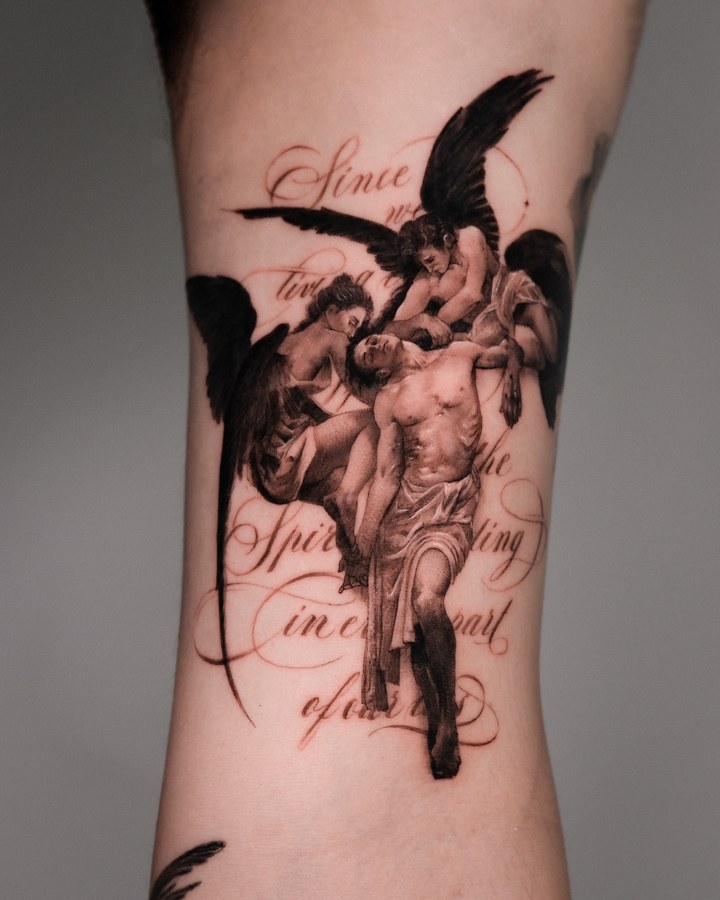
People who book a consultation usually arrive with a handful of saved photographs on their phone. Swipe through them and a pattern shows: very thin lines, a lot of empty space, and from a distance something closer to a pencil mark than a drawing. That is almost always the grain of what someone coming for fine line has in mind.
The thing that matters most in choosing a fine-line design is not the subject but the number of lines. A thin line spreads very slightly over the years, and the closer two lines sit, the more that spread reads as the two joining up. So of two versions of the same drawing, the one with generous empty space is the one that still looks like the original a few years on.
Subjects that suit a thin line
What suits a thin line is anything whose form is already simple: a plant with one stem and a few leaves, an initial or a short word, a single-stroke line drawing, a symbol such as a moon or a star. You can take lines away from these and still see what they are.
Even those do not go in untouched. Bring me one flower as a reference and the design will have fewer petals, no leaf veins, and the overlapping leaves pulled apart. The impression of the original stays; the line count comes down by close to half.
The opposite holds for faces, animal fur and buildings — subjects where the detail is what makes the form. To render those you have to pack the lines in, and once they are packed in the lightness that makes fine line worth having is gone. Those drawings come out better with shading mixed in from the start.
Size and placement are half the design
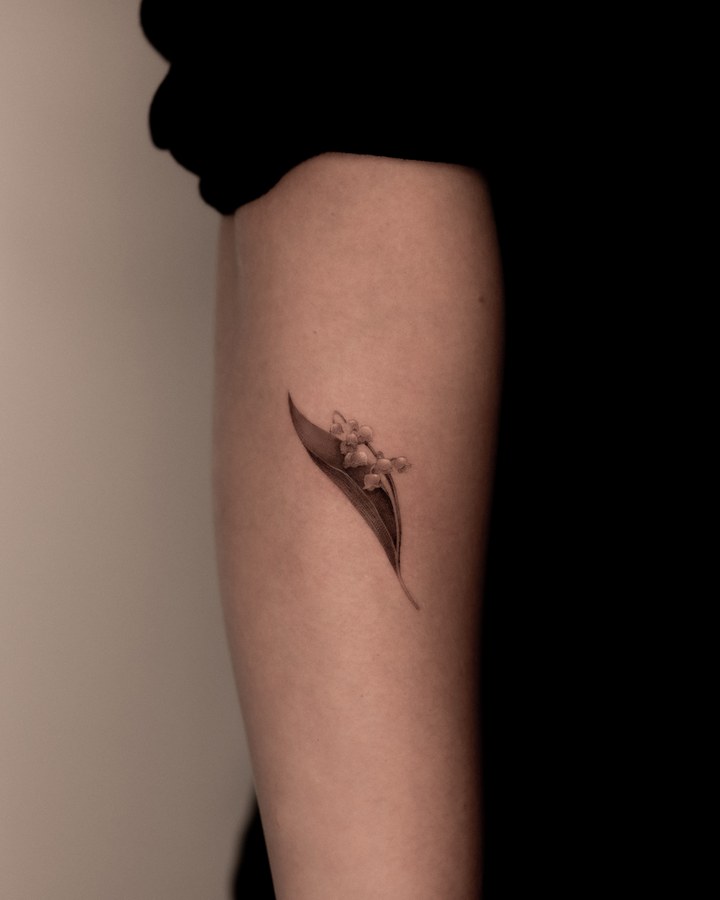
The same design at 3cm and at 7cm is two different jobs. The smaller it goes the tighter the gaps between lines, so if you want it small, something has to come out of the design. One flower done properly usually beats three flowers done small.
Placement is the same story. Fingers, the back of the hand and feet have thin skin and constant friction, and a thin line holds up poorly there. The inner arm, the upper arm, the back and below the collarbone are steadier skin, and they favour fine line. (Anyone who wants a finger for a first tattoo gets this same speech from me every time.) I have written more about how a thin line behaves over the years on the fine line page.
What I check before the design is final
Before a design is final I print it at actual size and hold it against the body. The size on a screen and the size on an arm often feel like different things. The direction gets settled here too: an arm is a curved surface, so the angle that looks right from the front is not the angle that looks right when you look down at it yourself.
The design shifts a little in the process: one element out, the line weight up slightly, the position moved two centimetres. It is less a matter of transferring a finished drawing than of redrawing it to fit that particular body.
Splitting it into several pieces
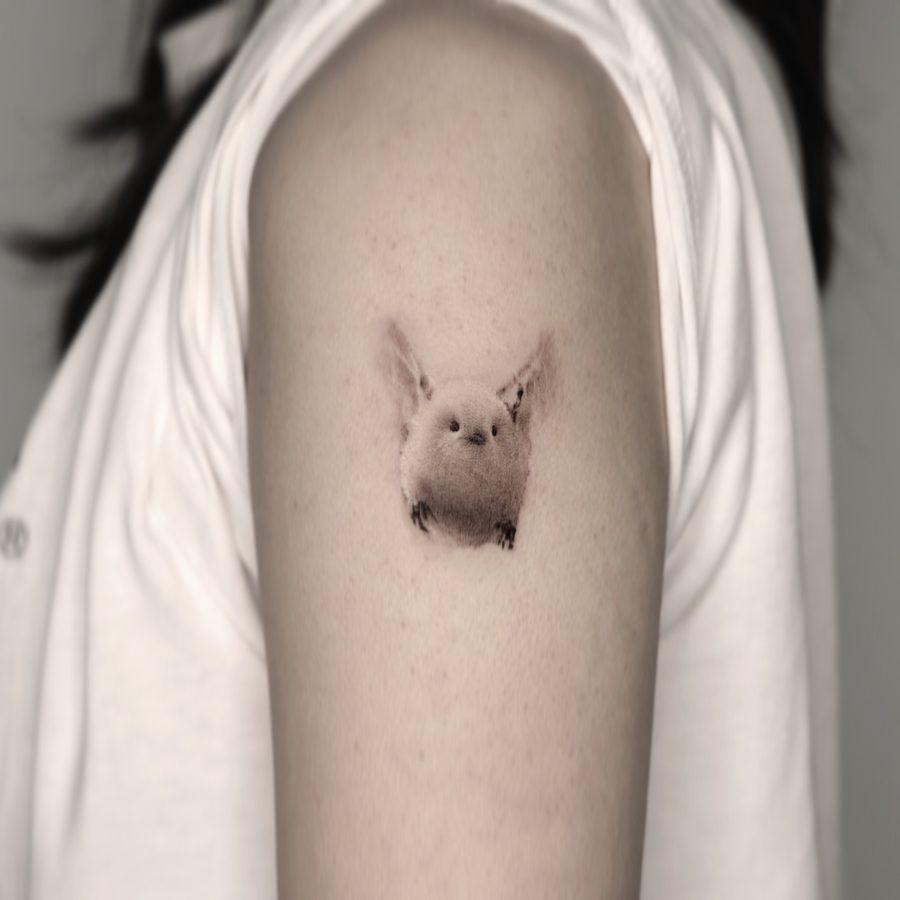
When there is a lot you want in one image, splitting it is usually better. Put every element into one design and the lines crowd; place them across two or three spots and each one stays simple while the whole still reads as one story. The inner arm and the upper arm, say, or spaced out along the same arm.
Splitting does make it harder to fill in between them or join them up later, so it is safer to sketch the whole arrangement first and then fix the positions. If you think you may add to it in future, say so at the consultation.
Cost follows line density, not size
Because fine line tends to be small, people often arrive expecting it to be cheap. What actually drives the time is not the area but how many strokes there are.
At the same 5cm, a drawing of ten lines and one of thirty with the leaf veins kept mean very different amounts of time in the chair. A thin line has to be laid down cleanly in one pass — you cannot stop halfway or go over it — so each stroke takes longer. Designs with a lot of curves, designs that have to be symmetrical, and designs with lettering in them each add setting-out time on top.
So there is no fixed price list. I look at the design and the placement and then give you a range. Because simplifying the design brings the cost down with it, it is easier for both of us if you tell me your budget at the consultation. How the price is decided is set out on the FAQ page.
Frequently asked
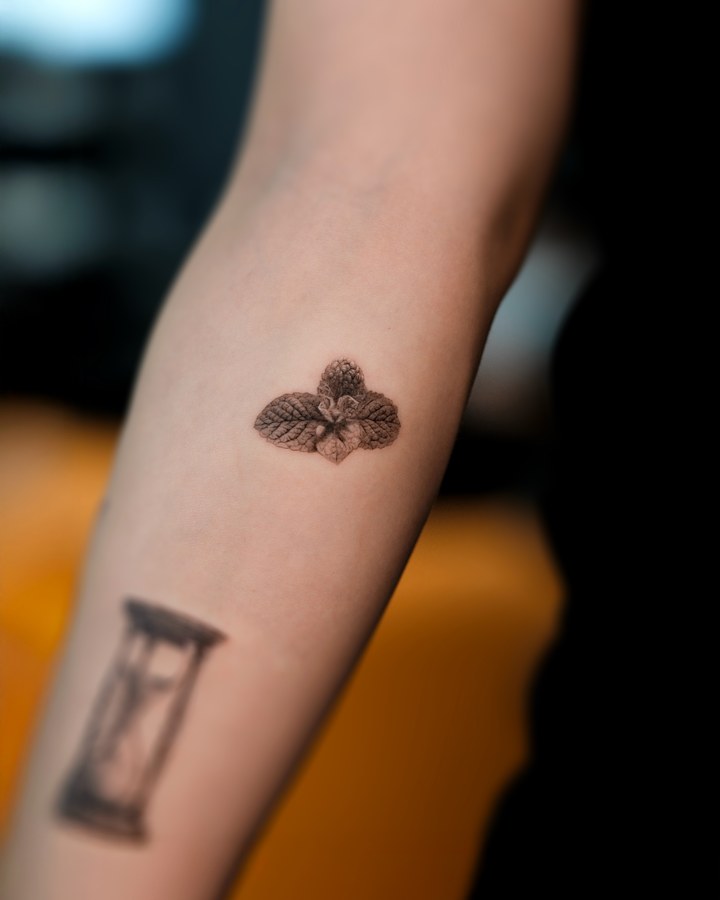
Q. Do all fine-line tattoos blur after a few years? How much they move varies a great deal with placement, line weight, sun exposure and skin. It is true that the thinner the line the more visible any change, which is why it is safer to build empty space into the design from the start.
Q. Can a pet's face be done in fine line? A likeness is hard with thin lines alone. We would decide together at the consultation whether to simplify it to the outline, or to mix in shading in places.
Q. Can I bring my own drawing? Please do. It will still need its lines tidied to suit the size and the placement. Bringing several reference images also helps to set the direction.
Bookings and enquiries →